
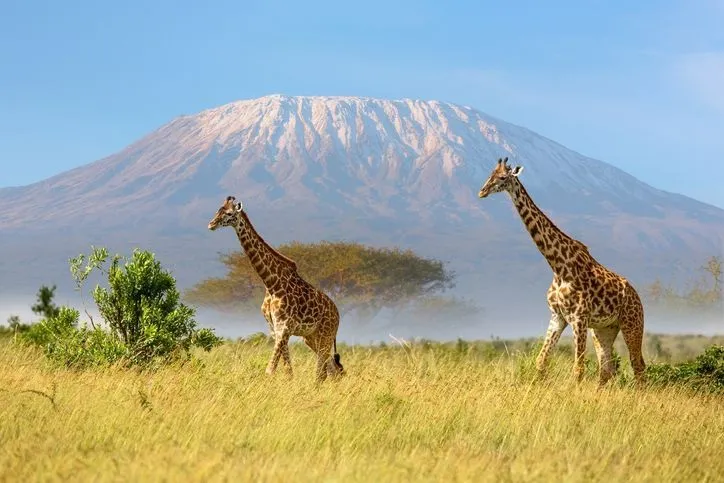
The Machame Route is one of the most popular ways up Mount Kilimanjaro, Africa’s highest mountain. This 7-day climb takes you through rainforest, moorland, alpine desert and finally the glaciers near Uhuru Peak at 5,895 metres.
The 7-day schedule includes extra time to acclimatise, which improves your chances of reaching the summit.
Drive to Machame Gate (1,800 m) and hike through rainforest to Machame Camp (about 3,000 m).
Climb out of the forest into heath and moorland to Shira Camp, with views across the plateau.
Walk up to Lava Tower and descend to Barranco Camp, a good acclimatisation day.
Climb the Barranco Wall and continue across the alpine desert to Karanga Camp.
Hike to Barafu Camp, the high camp, and rest before the summit attempt.
Start around midnight for the climb to Stella Point and Uhuru Peak at 5,895 m at sunrise, then descend to Mweka Camp for the night.
Descend through the forest to Mweka Gate, receive your summit certificates and drive back to your hotel.
Day 1: Machame Gate to Machame Camp
Day 2: Machame Camp to Shira Camp
Day 3: Shira Camp to Barranco Camp
Day 4: Barranco to Karanga Camp
Day 5: Karanga to Barafu Camp
Day 6: Summit Day: Uhuru Peak and Mweka Camp
Day 7: Mweka Camp to Mweka Gate
From USD 2,100 per person
Altitude sickness is the main risk. Good fitness, proper boots, a four-season sleeping bag and warm layers are essential, and summit night is very cold. Tell us about any medical conditions before booking and get a doctor’s advice. The summit climb starts around midnight.
Bring comfortable, lightweight clothes in natural colors like khaki, olive, sand, and earth tones. Pack layers too: mornings can be surprisingly chilly, while the middle of the day gets hot. You don’t need a fresh outfit for every day, since most lodges and camps can arrange laundry service.
Don’t forget your sun protection: a good hat, sunglasses, and sunscreen. Comfortable shoes are enough for most safaris. Heavy hiking boots are only needed if you’re doing a walking safari, primate tracking, or mountain climbing.
A good pair of binoculars is a must. A camera is great, but binoculars will transform the way you experience wildlife, especially birds and animals that are far away.
For luggage, we recommend a soft-sided bag over a hard suitcase. It fits much more easily into safari vehicles and small aircraft, where space is tight and weight is often limited to 15 kg.
Most importantly, don’t overpack. Travel light and enjoy the adventure!
10 Days
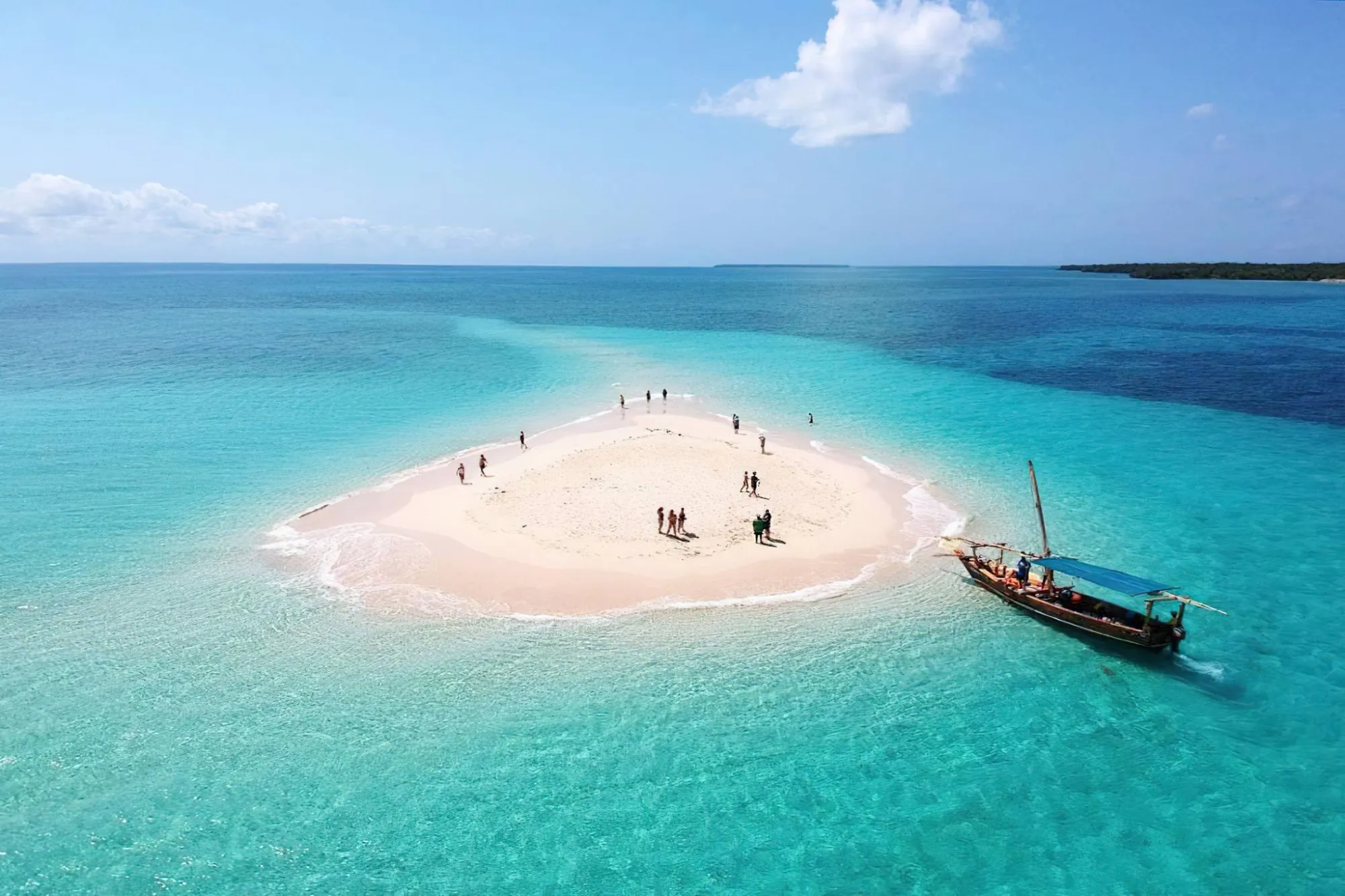
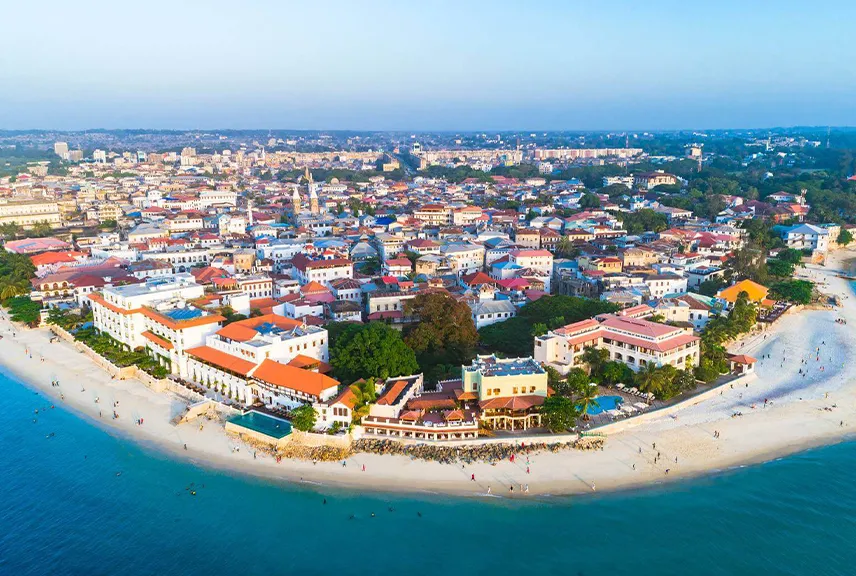
Reach the roof of Africa on Kilimanjaro, then unwind with three nights on Zanzibar’s white-sand beaches with Stone Town and spice farm visits.
Starting from USD 3200 Per Person
4 Days
Visit Rubondo Island National Park in Lake Victoria for chimpanzee trekking, boat safaris, birding and walks among sitatunga, giraffe and elephant.
Starting from USD 1300 Per Person
3 Days
This 3-day safari from Arusha pairs two of northern Tanzania’s most scenic parks. Lake Manyara National Park has groundwater forest, hippos, flamingos on the alkaline lake in some seasons, and lions that are known for resting in trees.
The Ngorongoro Crater is a collapsed volcano whose floor holds a high density of wildlife, including lions, elephants, buffalo, hippos and a chance of black rhino.
Starting from USD 1500 Per Person
5 Days
Ruaha National Park is one of Tanzania’s largest and least visited parks. It is a dry, rugged landscape of baobab trees, rocky hills and the Great Ruaha River, and is known for large lion prides, elephants and both greater and lesser kudu.
This 5-day fly-in safari gives you three full days of game drives with a small number of other vehicles around.
Starting from USD 3000 Per Person
17 Days
This 17-day safari links three countries: Uganda, Tanzania and Namibia.
In Uganda you take part in gorilla habituation in Bwindi and chimpanzee habituation in Kibale, with a Bigodi Swamp walk. You then fly to the Serengeti in Tanzania for a wildlife safari, and continue to Namibia for Windhoek, Sossusvlei and Deadvlei, Swakopmund, Walvis Bay, Sandwich Harbour and an Etosha game drive, before departing on day 17.
Starting from USD 9,800 Per Person
8 Days
This 8-day, 7-night safari combines Uganda primates with a Tanzania game safari.
You take part in gorilla habituation in Bwindi, walk Bigodi Swamp and join chimpanzee habituation in Kibale, then transfer to Entebbe and on to the Serengeti for a wildlife safari before departing on day 8.
Starting from USD 5,400 Per Person
20 Days
This 20-day, 19-night safari links three countries, Uganda, Kenya and Tanzania.
You trek mountain gorillas in Bwindi and rest at Lake Bunyonyi, fly to Nairobi, then visit Amboseli, Lake Naivasha, Lake Nakuru and several days in the Masai Mara. You cross into Tanzania for four days in the Serengeti, then visit Ngorongoro Crater before departing from Arusha on day 20.
Starting from USD 9,500 Per Person
5 Days
This 5-day, 4-night Zanzibar tour mixes beaches, culture and the sea.
After arrival and transfer to your hotel, you take the Safari Blue sailing trip, spend a half day with dolphins and snorkelling at Mnemba, and explore Stone Town, a UNESCO World Heritage Site, before departing on day 5.
Starting from USD 1,150 Per Person
9 Days
This 9-day, 8-night journey combines the wildlife of Ngorongoro Crater and Serengeti National Park with a beach stay on Zanzibar.
You arrive at Kilimanjaro International Airport, visit Ngorongoro Crater, spend several days in the Serengeti, then travel to Zanzibar and stay at Neptune Pwani Beach Resort before departure on day 9.
Starting from USD 4,700 Per Person
7 Days
This 7-day, 6-night luxury safari in Tanzania combines the wildlife and scenery of Tarangire National Park, Ngorongoro Crater and Serengeti National Park, with comfort throughout.
You arrive in Arusha and go to Tarangire for a full day, then explore Ngorongoro Crater, travel to the Serengeti, spend a full day there and depart from the Serengeti on day 7.
Starting from USD 5,900 Per Person
5 Days
This 5-day, 4-night Tanzania safari visits Serengeti National Park and the Ngorongoro Conservation Area, with game drives, birdwatching and community visits.
You are picked up in Arusha and drive to the Serengeti, spend a full day there, take an early game drive before moving to Ngorongoro, spend a full day in the crater area, and return to Arusha on day 5.
Starting from USD 2,600 Per Person
3 Days
This 3-day safari focuses on Serengeti National Park, one of the best-known wildlife destinations in Africa.
You arrive in the Serengeti, spend a full day on game drives across the open plains, and take a final morning game drive before departure. Ask us about the wildebeest migration and where the herds are likely to be on your dates.
Starting from USD 1,684 Per Person
We use cookies
We use cookies to make this site work and to understand how it is used, so we can improve your safari planning experience. Read our Privacy Policy.